Loading
August 14, 2026
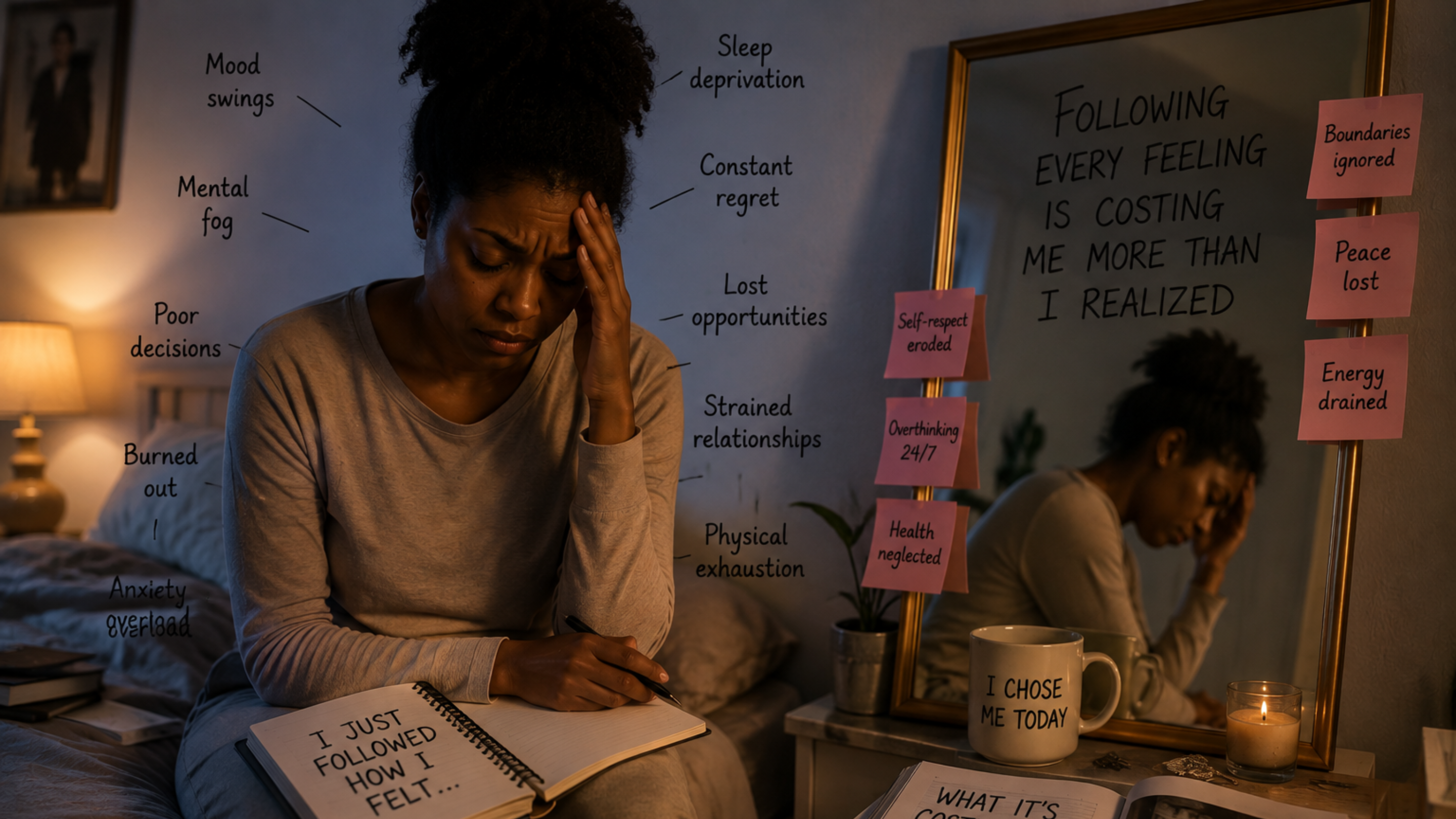
Why Swallowing Your Feelings Is Not Strength. What It Is Actually Costing Your Body and Mind
ou’ve mastered the art of holding it all together. But your body knows the truth. Discover the hidden physical and mental costs of emotional suppression, why high-achieving women carry the heaviest burden, and how to finally put down the weight you’ve been carrying alone.
If you have been carrying your emotional weight alone, swallowing what hurts, managing what overwhelms, and performing fine for an audience that never asked how you actually were, this post is the science behind what that has been costing you. It is more than you think.
She had mastered the art of holding it all together.
She could walk into a room carrying the weight of a difficult week, a painful conversation, a grief she had not had time to sit with, and nobody would ever know. She smiled, engaged, and got things done so smoothly. She was the last person anyone would describe as struggling.
But her body knew.
The tension across her shoulders that never fully released even after sleep. The chest tightness that arrived during meetings for no clear reason. The jaw she clenched at night without realising it. The immune system that kept breaking down at the most inconvenient times.
She came to me with a question so many women carry but rarely ask out loud.
"Could it be connected? The way I never let myself feel things, could that actually be making me physically unwell?"
Yes. The science says yes. And it has been saying so for longer than most people realise.
The Lesson We Were All TaughtMost of us learned emotional suppression before we had a name for it.
We learned it from environments where big feelings were inconvenient, unwelcome, or met with discomfort. We learned it from the early message spoken or unspoken that to be loved and accepted, we needed to manage our emotional world in private. That composure was character. That strength was silence. That the woman who held it together was the woman worth admiring.
So we held it together. We swallowed the anger that felt too frightening to show. We tucked the grief away for later. We convinced ourselves that the loneliness, the overwhelm, the ache of being fundamentally unseen, were things we did not have time for. We were high-functioning. We were competent. We were fine.
And we paid for it. In ways we are only beginning to fully understand.
What Science Says Is Happening Inside YouA September 2025 review published in the International Journal of Creative Research and Thoughts synthesised psychological research on emotional suppression and physical health outcomes. The findings are unambiguous. Prolonged emotional suppression elevates the risk of cardiovascular diseases, autoimmune disorders, and gastrointestinal problems, through the persistent activation of stress pathways that were never designed to run continuously. The body's stress response system was built for acute threats. When it is kept activated by chronically suppressed emotion, it begins to damage the very systems it was designed to protect.
Let that settle for a moment.
The frequent headaches, digestive issues, chest tightness, and an unstable immune system. These are not random. They are not simply stress. They are the measurable physiological cost of keeping your emotional world locked behind a composed exterior. A 2026 meta-analysis published in SAGE Journals, synthesising 27 experimental and correlational studies, found that emotional suppression results in greater cardiovascular reactivity, elevated blood pressure, and greater sympathetic nervous system activation compared to non-suppression states.
Researchers describe suppression as cognitively expensive, noting that it takes sustained executive effort to keep internal emotional arousal from surfacing outwardly. That effort does not disappear. It accumulates. And over time it creates what scientists call chronic physiological load, a body running on a stress tax it can never fully repay.
A stress tax it can never fully repay. That phrase has stayed with me since I first read it, because that is exactly what I see in the women I work with. Not a single moment of overwhelm but years of accumulated, unpaid emotional debt sitting in the body as tension, inflammation, exhaustion, and pain that no medical test can locate because it was never a medical problem to begin with.
What It Is Doing to Your MindThe cost is not only physical. What chronic emotional suppression does to the mind is equally significant, and equally underdiscussed.
Research published in Frontiers in Psychology in 2026 found that chronic emotional suppression fosters biased attention toward negative stimuli, meaning that the person who habitually suppresses their feelings begins, over time, to perceive their environment through an increasingly negative lens. This sustained negative effect is directly linked to heightened depressive symptoms. In plain terms, the longer you hold your feelings in, the more your mind begins to filter reality through the weight of what it is carrying. You are not becoming more pessimistic. You are becoming more burdened. And the burden is distorting what you see.
Beyond the depression risk, there is something else that suppression does that is perhaps the most insidious of all. It numbs.
When we suppress consistently, when we train ourselves to not feel the painful things, we do not surgically remove only the painful emotions. We dull the entire emotional register. Women who have spent years holding their emotional world at arm's length often describe a creeping numbness that extends to joy, connection, pleasure, and to the moments that should feel meaningful. They watch their children do something beautiful and feel nothing. They achieve something significant and feel nothing. They reach for the feeling and find the shelf empty.
That is not ingratitude. That is not depression in the clinical sense. That is the cost of a heart that has been locked for so long it has forgotten how to open.
The Particular Tax on High-Achieving WomenI want to name something specifically here.
The women most likely to carry their emotional weight alone are often the women most publicly admired for their strength. They are the high-achievers, the leaders, the caregivers, the ones whose lives, from the outside, look like evidence that everything is fine.
For these women, the cultural permission to not be fine is almost nonexistent. Vulnerability can feel like professional risk. Emotional need can feel like weakness that would unravel the carefully constructed image. And so they suppress, not because they want to, but because the cost of not suppressing, in their world, seems higher.
What the research is now showing us is that the actual cost runs in exactly the opposite direction. The suppression that looks like protection is the very thing doing the damage. And the women paying the highest price are the ones who have held it together the longest.
What Emotional Wellness Actually Looks LikeHealing from chronic emotional suppression is not about becoming someone who cries publicly or processes every feeling in real time. That is not the goal.
The goal is internal permission. The capacity to feel your emotional world without being destroyed by it. To process what needs processing, in the right space, with the right support, so that your body no longer has to carry what your mind has been refusing to acknowledge.
This is not a quick fix. It is not a weekend retreat or a journaling habit. It is genuine, sustained, intentional work, the kind that actually changes your relationship with your own inner life. And it is absolutely possible. I have watched it happen hundreds of times.
Your Next StepIf this post has named something you recognise in yourself, if the physical symptoms, the numbness, the accumulated weight of carrying it all alone has started to make a different kind of sense, I want to offer you a place to begin.
The Woman Evolve and Thrive course was built for exactly this moment. For the woman who is ready to stop managing her emotional world in private and start actually engaging with it safely, intentionally, and with the guidance of someone who has walked this terrain and knows it well. This course is your permission slip to finally put down what you have been carrying alone. And your first step toward a body and a mind that are no longer paying the tax of suppression.
Start your transformation journey here
And if you are ready to do this work with direct, personal support, if you want a private space where your emotional world can finally be held without judgment, editing, and without performing fine, I would love to work with you one-on-one.
Book your private session here.
Your body has been speaking for a long time. It is not a weakness to finally listen. It is the bravest thing you can do.
Adeola Kingsley James is a Certified Rapid Transformational Therapist, Clinical Hypnotherapist, Trauma Healing Coach, Best-Selling Author, and founder of OMG Global, Owning My Greatness. She helps high-achieving women heal the emotional wounds they have been carrying alone, so their bodies can finally exhale, and their lives can finally expand. If this post spoke to something real in you, reach out. You do not have to keep carrying this by yourself.
References
Frontiers in Psychology. (2026, April 27). *Impact of expressive suppression on subthreshold depression among college students: A moderated mediation model.* https://www.frontiersin.org/journals/psychology/articles/10.3389/fpsyg.2025.1678275/full
Gross, J. J., & John, O. P. (2003). Individual differences in two emotion regulation processes: Implications for affect, relationships, and well-being. *Journal of Personality and Social Psychology, 85*(2), 348–362.
International Journal of Creative Research and Thoughts (IJCRT). (2025, September). *Emotional suppression and its impact on physical health.* Volume 13, Issue 9. https://www.ijcrt.org/papers/IJCRT2509330.pdf
Pu, Y., & Kong, Z. (2026). "Strong enough to suffer": Emotional suppression, stress exposure, and physiological health among men across the life course. *American Journal of Men's Health.* https://journals.sagepub.com/doi/full/10.1177/15579883261441859
Tyra, A. T., et al. (2024). A meta-analysis of emotional suppression and acute physiological stress responses. *(As cited in Pu & Kong, 2026.)*
van der Kolk, B. (2014). *The body keeps the score: Brain, mind, and body in the healing of trauma.* Viking.